Executive Summary
89% of first-time Bitcoin users in Africa abandon self-custody wallets within their first week. Not because they don't understand Bitcoin's value. Because the user experience makes it functionally inaccessible.
This white paper makes the case for Bitcoin UX infrastructure designed specifically for Africa: a shared foundation of research, design patterns, testing frameworks, and training that lets every Bitcoin wallet, exchange, and service deliver excellent user experiences without rebuilding everything from scratch.
What This Paper Covers
- Why UX is now the limiting factor for Bitcoin adoption, not the technology
- Why every wallet rebuilding UX from scratch wastes millions and loses years
- Why African users need Africa-specific research, not assumptions ported from Silicon Valley
- A concrete proposal for shared Bitcoin UX infrastructure
- The return on investment case for ecosystem-level funding
The Problem: Bitcoin UX Is Holding Back Adoption
The Current State
Bitcoin has the potential to provide financial access to Africa's 1.5 billion people, 57% of whom are unbanked or underbanked. The continent sends $95 billion in remittances annually, paying an average of 8.5% in fees. That money could stay in African communities if Bitcoin provided a real alternative.
It isn't providing that alternative yet, and the reason is design.
This Is a Design Problem
When a Nigerian nurse who manages her family's finances through M-Pesa can't safely back up her Bitcoin wallet, that's not a Bitcoin problem. When a Kenyan entrepreneur who runs a successful business gets locked out of his Bitcoin because the interface never clearly explained what a seed phrase is, that's a design failure. The protocol works. The interfaces don't.
Why Current Approaches Are Failing
Most Bitcoin wallets and services approach African users one of two ways, and both consistently fail.
The first is porting Silicon Valley design to Africa. Wallet teams build for their own context: high bandwidth, unlimited data, latest smartphones, English fluency, existing banking experience. Then they assume it works everywhere. The result is interfaces that consume too much data, use unfamiliar mental models, ignore local languages, and assume background knowledge most African users don't have.
The second is starting from scratch. Companies recognize they need African-specific UX and attempt their own user research. Each wallet then spends 6–18 months and $50,000–$200,000 recreating what others have already discovered and solved.
The Infrastructure Gap
What's missing from the Bitcoin ecosystem today: no centralized database of what works and what doesn't for African users, no standard design components that wallets can use and customize, no shared platform for running usability tests across African markets, no documentation of what actually works in mobile-first data-constrained environments, and fewer than 5% of Bitcoin UX designers globally are African.
Every Bitcoin company wastes time and money solving problems that have already been solved, while users continue struggling with poorly designed interfaces.
Why Africa Needs Africa-Specific Bitcoin UX
Context Determines Design
User experience design is not universal. What works for a San Francisco software engineer on gigabit fiber with an iPhone 15 Pro does not work for a Lagos market vendor on a 2G connection with a $50 Android phone. The African-specific challenges include data constraints (users often pay per megabyte), intermittent connectivity, lower-end devices with small screens and older Android versions, over 2,000 languages spoken across the continent, and a population whose first experience with digital money was mobile money, not traditional banking.
There's also justified skepticism. A history of scams and fraud means new financial technology faces trust barriers that have to be designed around, not ignored.
Example: Transaction Confirmation UX
Western Bitcoin wallets show transaction fees in BTC or satoshis. Our research found this is incomprehensible to 87% of new African users. When we changed to "Cost: KES 45 (~$0.30)" and added "This pays for processing time of ~30 minutes", confirmation rates increased 43% and support tickets dropped 61%. You only learn this by testing with actual African users.
Mobile Money as the Reference Point
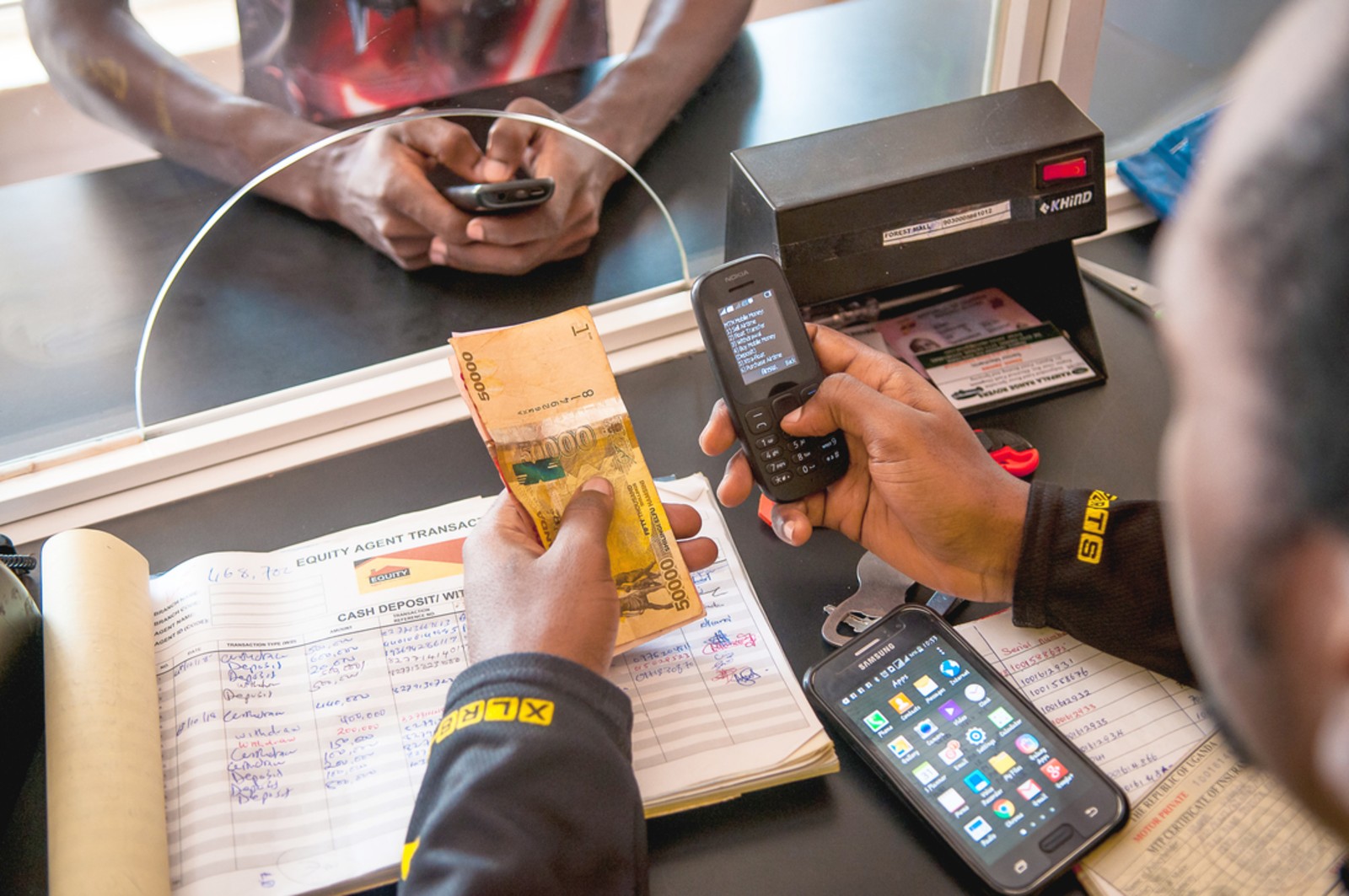
In Kenya alone, 96.3% of Bitcoin transactions happen on mobile. Users' mental models are shaped by M-Pesa, not Chase Bank. That changes nearly every UX requirement: M-Pesa uses 4-digit PINs, so complex passwords feel foreign. M-Pesa transactions appear instant, so Bitcoin's confirmation model requires different education. M-Pesa uses phone numbers as identity, so Bitcoin addresses are a genuinely foreign paradigm. M-Pesa has physical agents for support, so Bitcoin needs equivalent support patterns. None of these show up in Western Bitcoin wallet design.
The Cost of Getting It Wrong
An 89% abandonment rate means losing 9 out of 10 potential Bitcoin users. Seed phrase failures lead to permanent loss of funds, potentially devastating for users with limited savings. Bad experiences create negative word-of-mouth that damages Bitcoin's reputation across entire communities. Support teams spend 60%+ of their time on issues that better UX would prevent. And high failure rates give regulators ammunition to restrict Bitcoin access.
The Solution: Shared Bitcoin UX Infrastructure
What Infrastructure Means Here
Just as Bitcoin itself is infrastructure that anyone can build on, Bitcoin UX infrastructure provides a shared foundation for all wallets and services to build better user experiences. It operates across four layers.
The Four Layers of Bitcoin UX Infrastructure
Layer 1: Research Foundation
- Database of user research studies across African markets
- Behavioral insights and mental models
- Usability benchmarking and comparative analysis
- Ongoing market intelligence
Layer 2: Design Standards
- Open-source design pattern library: components, flows, interactions
- Best practices documentation
- Accessibility guidelines for diverse user needs
- Multi-language content frameworks
Layer 3: Testing and Tools
- Shared usability testing platform across African countries
- Analytics dashboard for UX metrics
- Easy integration tools for wallets
- A/B testing frameworks
Layer 4: Ecosystem Development
- Training programs for African Bitcoin UX designers
- Mentorship networks and community
- Open-source contribution incentives
- Bootcamps and workshops
The AWS Model Applied to UX
Without shared infrastructure, three wallets each spend 6–9 months testing in different African markets, each learning the same things, each paying $60–90K to get there. Total: 23 months and $230K for the same set of learnings.
With shared infrastructure, one comprehensive study takes 6 months and $50K. Findings, design patterns, and tested solutions get published. Each wallet implements them in three weeks. The research investment is made once and benefits everyone. 78% time savings,, 82% cost savings, with better outcomes across the board.
Why Open Source
Bitcoin UX infrastructure has to be open source. Better UX for one wallet improves Bitcoin's reputation across the ecosystem. The more wallets that contribute learnings, the more valuable the infrastructure becomes. Financial inclusion infrastructure shouldn't be locked behind proprietary walls. Every Bitcoin company benefits when user experience improves across the board. We see the same dynamic with React, Tailwind, and Bitcoin Dev Kit. Open-source infrastructure gets adopted when it solves real problems.
The Economic Case
Direct Benefits to Wallet Companies
A Bitcoin wallet launching in Africa typically spends $50K–80K on user research, 6–12 months on design iteration, and $30K–50K per year on UX-related support issues. With shared infrastructure, the same company spends $5K–10K contributing to open-source tooling, 3–4 weeks implementing proven patterns, and roughly $10K–15K per year on support. Net benefit in year one: over $100K per wallet, ongoing annually after that.
Ecosystem-Level Impact
When companies don't waste time on solved problems, they can focus on new ones. Consistent design patterns across wallets make Bitcoin easier to learn. Better UX unlocks user segments that poor design previously excluded. Lower failure rates reduce the regulatory concerns that threaten Bitcoin access across the continent.
Social Impact
If Bitcoin captures just 10% of Africa's $95B remittance market, that's $8 billion saved in fees annually, staying in African communities rather than going to intermediaries. Bitcoin provides inflation-resistant savings for millions facing currency devaluation. Access to the global Bitcoin economy enables entrepreneurship, freelancing, and cross-border commerce. Self-custody gives individuals real control over their wealth. None of this happens at scale if the UX remains broken.
Addressing Common Objections
"Can't individual companies just do good UX?"
They could, but most don't, because most Bitcoin startups lack UX expertise and the budget for proper research. Even well-funded companies waste resources duplicating each other's work. Individual companies optimize for their own product, not ecosystem-wide patterns. African-specific expertise is scarce. Shared infrastructure multiplies limited talent. Every other mature technology ecosystem has this kind of shared foundation. Bitcoin UX shouldn't be different.
"Won't companies just ignore open-source design patterns?"
They'll use them because it's economically rational. Tested patterns reduce risk and speed up shipping. They're free to use. Consistent patterns across wallets benefit users, which benefits everyone in the ecosystem. And contributing back improves tools you depend on. We've seen this with React, Tailwind, and Bitcoin Dev Kit.
"Why focus on Africa specifically?"
Africa is Bitcoin's largest underserved opportunity and requires specific design thinking that doesn't exist yet. 1.5 billion people, 57% unbanked. A young, mobile-first population. High remittance costs that give Bitcoin a clear value proposition. A unique context that existing UX patterns don't transfer to. And an early-stage ecosystem where infrastructure can still be built before fragmentation sets in. If Bitcoin succeeds in Africa, it validates the financial inclusion thesis globally.
"Isn't this just another organization asking for donations?"
This is infrastructure investment with concrete deliverables: research reports, design libraries, testing platforms. Outcomes are measurable: adoption rates, retention metrics, cost savings per wallet. All work is open source and publicly verifiable. The sustainability model is ecosystem-funded: companies that benefit from the infrastructure eventually fund it. Every dollar invested creates an estimated $10–20 in ecosystem value.
The Path Forward
Phase 1: Foundation (Months 1–6)
- Conduct comprehensive UX studies across 6 African countries
- Publish findings and establish research methodology
- Secure commitment from 3–5 wallet companies to pilot the infrastructure
- Hire core team of UX researchers with African market expertise
Phase 2: Infrastructure Building (Months 7–18)
- Create open-source component library based on research findings
- Build shared usability testing infrastructure
- Document and publish UX guidelines
- Launch training program for African Bitcoin UX designers
Phase 3: Ecosystem Activation (Months 19–36)
- 15+ wallets and services using shared infrastructure
- Document improvement in adoption and retention metrics
- Transition to sustainable funding via ecosystem contributions
- Grow research coverage to 15+ African countries
Three-Year Targets
How to Get Involved
If you're a funder, the initial research phase costs $150K for 12 months. The full infrastructure build is $300K for 18 months. The complete 3-year program is $750K total. Every dollar invested creates an estimated $10–20 in ecosystem value.
If you're building a Bitcoin wallet or service, commit to piloting shared design patterns, contribute your existing research learnings to the open database, and provide feedback on infrastructure tools as they're built.
If you're a designer or researcher, join our training program to specialize in Bitcoin UX, contribute to the open-source design system, and help conduct user research in African markets.
If you're a Bitcoin advocate, share this paper with your network and connect us with potential funders and partners.
Where This Leaves Us
Bitcoin has the technical capability to provide financial freedom to billions of people. The protocol works. The network is robust and growing.
In Africa, where Bitcoin's promise of financial inclusion could have the greatest impact, bad UX isn't just frustrating. It's exclusionary. It's a barrier to economic opportunity. The infrastructure to fix it doesn't exist yet, which means we can build it thoughtfully, collaboratively, and openly.
Two Directions
We continue as we are: wallets struggle independently, users abandon Bitcoin, adoption stagnates, Africa misses the opportunity. Or we build shared infrastructure: learn once, benefit everywhere, users succeed, Africa becomes the proof of concept for what Bitcoin can do for the unbanked world.
We think the second direction is worth building toward. If you do too, get in touch.