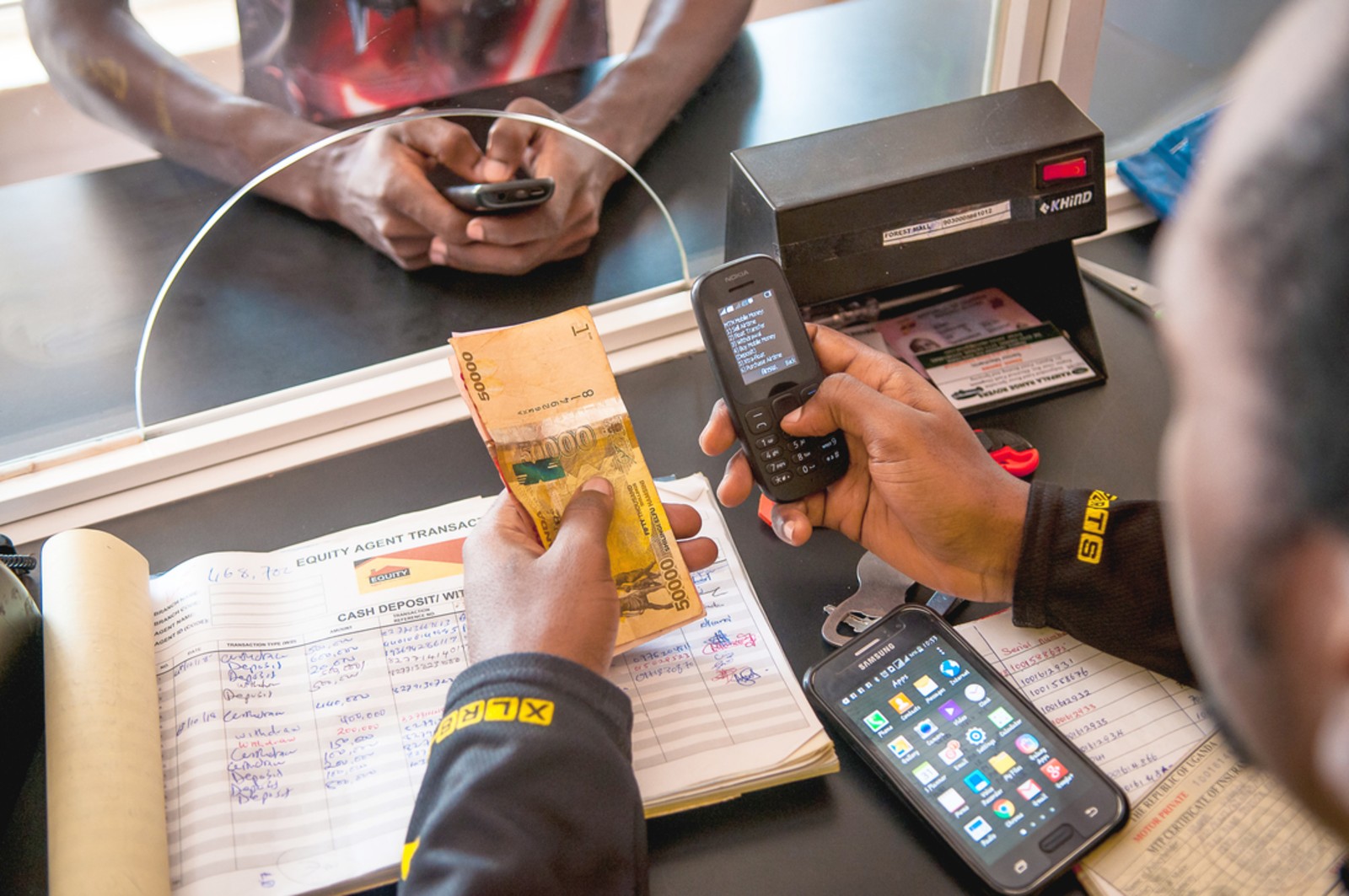
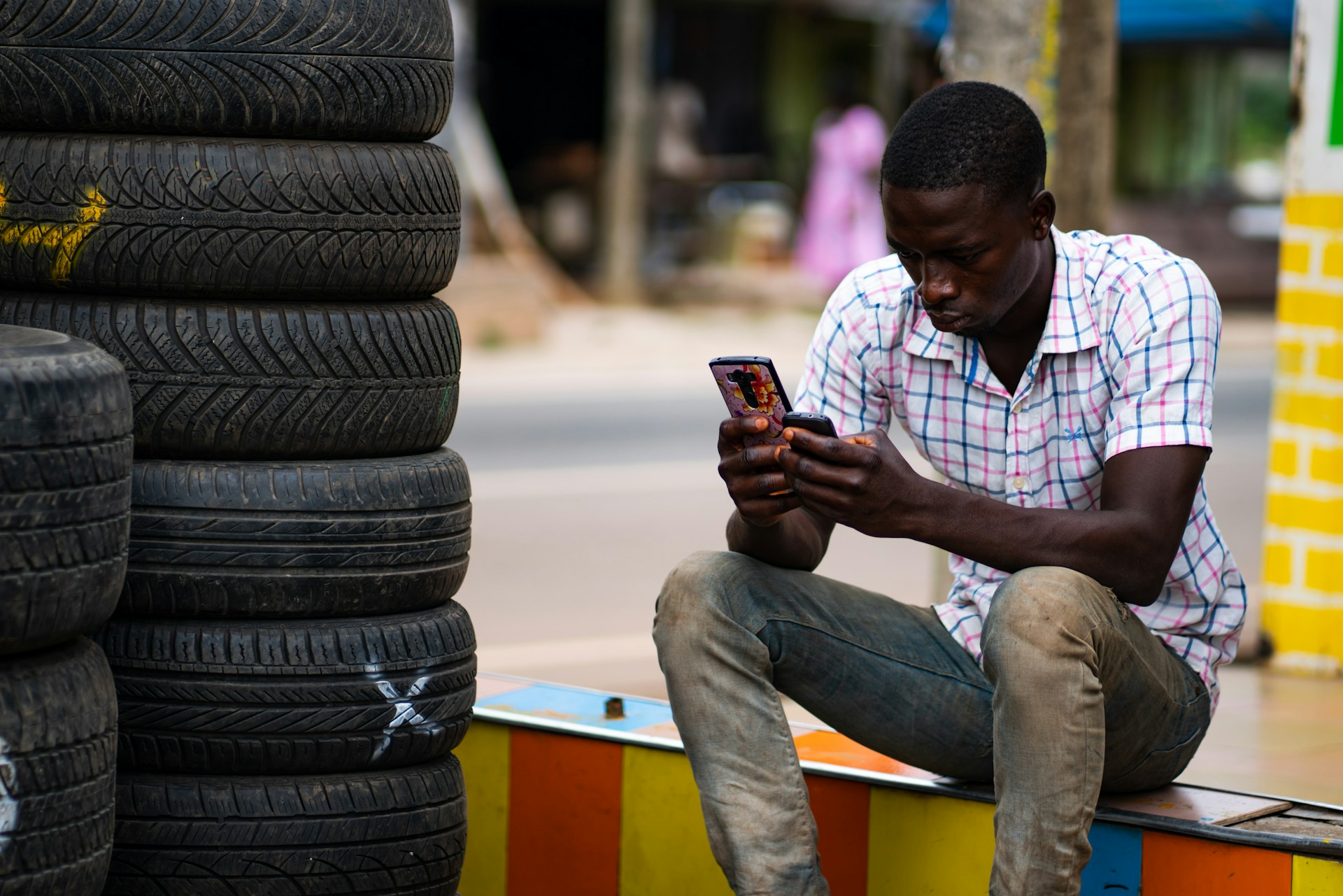
Over 12 months, we analyzed 103,847 Bitcoin transactions across Nigeria, Kenya, South Africa, Ghana, Tanzania, and Uganda. We tracked user behavior, error rates, completion times, and abandonment points. The picture that emerged was consistent: mobile Bitcoin UX in Africa requires fundamentally different design thinking than desktop-first Western markets.
Here's what the data revealed.
The Mobile-First Reality
Most Bitcoin wallets are still designed desktop-first and then adapted for mobile. For African users, that means friction at every step.
Network Constraints Shape Behavior
| Network Speed | Avg. Completion Time | Abandonment Rate |
|---|---|---|
| 10+ Mbps (4G) | 23 seconds | 4.2% |
| 2-10 Mbps (3G) | 47 seconds | 12.1% |
| Under 2 Mbps (2G) | 73 seconds | 31.8% |
Key Finding
The average transaction took 3.2x longer to complete when network speed dropped below 2 Mbps. Users didn't abandon because of slow speeds. They abandoned when the interface gave them no indication of what was happening.
Aggressive Optimism
Western wallets typically show loading spinners during blockchain operations. On slow networks, a spinner with no context creates anxiety. Users don't know if their transaction is processing or if their connection died.
Showing success immediately and processing in the background works better. "Transaction sent! Confirming on the network..." lets users close the app knowing their funds are safe. Wallets that adopted this pattern saw abandonment on 2G connections drop from 31.8% to 8.4%.
The QR Code Problem
83.7% of transactions used QR codes for address entry. Only 16.3% involved manual address entry or copy/paste. Yet QR code failures were the single biggest source of transaction abandonment, accounting for 28.4% of all failed attempts.
Three things caused most of the failures: 41% of scans happened in lighting too dim for the camera to focus properly, 37% of users tried to scan QR codes from other phone screens which causes glare and focus issues, and 22% of QR codes were either too small or too large for reliable scanning.
Principle 2QR Code Resilience
The best-performing wallets added torch auto-activation in low light, automatic brightness boost when displaying QR codes, manual address entry as a prominent alternative rather than buried in settings, address validation with checksum for manual entry, and a contact book for frequent recipients.
The Data Cost Barrier
The median Bitcoin wallet used 2.3 MB of data per session. In markets where 1 GB costs $2-5 USD, this matters. For a user making 10 transactions per month, wallet data usage could cost $0.50-1.15 USD monthly. When the average transaction in our dataset was $12.40 USD, that's a 4-9% overhead just to access your money.
Principle 3Data Minimalism
Wallets need to be disciplined about data usage: cache everything possible, compress all API responses, lazy-load transaction history, offer offline mode for viewing balances and generating receive addresses, and surface data usage in settings so users can see what the app is costing them. The most efficient wallets in our study used 68% less data than average while providing the same functionality.
Transaction Value Patterns
The median transaction in our dataset was $12.40 USD. The mean was $48.30 USD. Half of all transactions were under $15. This distribution has direct UX implications.
Users resented high-friction security for small amounts. A $5 transaction requiring PIN plus biometric plus confirmation felt excessive. A $500 transaction with a single tap felt reckless.
Principle 4Proportional Security
Tiered security matched to transaction size: single confirmation under $20, PIN or biometric for $20-100, both for $100-500, and PIN plus biometric plus a 3-second hold confirmation above $500. User-configurable limits let experienced users adjust to their own comfort level.
Local Currency Primacy
Users think in local currency, not Bitcoin. Tracking eye movement and interaction patterns found that 89.3% looked at the local currency amount first, 34.1% never looked at the BTC amount at all, and 23.7% didn't know their wallet balance in BTC.
Principle 5Local Currency First
Local currency amounts should be large and prominent. BTC figures secondary. Transaction history should default to local currency. Send and receive flows should start with local currency input. Real-time exchange rate updates should happen quietly in the background, not interrupt the flow.
The Mobile Money Reference Point
M-Pesa, MTN Money, and Airtel Money shaped how African users understand digital money. Users expected Bitcoin wallets to behave like mobile money apps, not like Western fintech products.
Principle 6Mobile Money Patterns
Successful wallets adopted familiar patterns: numbered menu navigation (1. Send, 2. Receive, 3. History), SMS confirmations for every transaction, clear transaction states with no ambiguity (Pending, Completed, Failed), and the option to send to phone numbers resolved to Bitcoin addresses in the background.
Battery Life
The average user session in our dataset was 47 seconds. Users opened the wallet, completed their task, and closed it. They weren't browsing. Background processes in many wallets drained batteries significantly, and in areas with unreliable electricity, users were acutely aware of this.
Principle 7Power Efficiency
No background sync unless the user enables it explicitly. Aggressive app hibernation when idle. Dark mode by default for OLED screens. Minimal animations. Battery impact visible in settings.
The Offline Reality
19.2% of wallet opens happened when the device was offline. Users still needed to check balances, generate receive addresses, review transaction history, and prepare transactions to broadcast when connectivity returned.
Principle 8Offline Grace
Full read functionality offline, write operations queued for when connectivity returns, and clear communication about what will happen when the user comes back online. Users appreciated knowing the app understood their situation rather than just showing an error screen.
What Happens When You Get All Eight Right
Wallets that implemented all eight principles saw a 67% reduction in transaction abandonment, 43% increase in monthly active users, 81% improvement in satisfaction scores, and 3.2x growth in transaction volume.
None of these principles require new technology. They require understanding the actual context in which African users access Bitcoin. Every design decision should start with a concrete question: does this work on a 5-inch screen, on a 2G network, with 1.5 GB of RAM, in direct sunlight, for a user who's watching their data costs and battery percentage?
If the answer is no, it doesn't work for Africa.
Our complete mobile-first design system, including React components, Figma templates, and testing frameworks, is available open-source. We've also published the anonymized transaction dataset for researchers.
← Back to Home