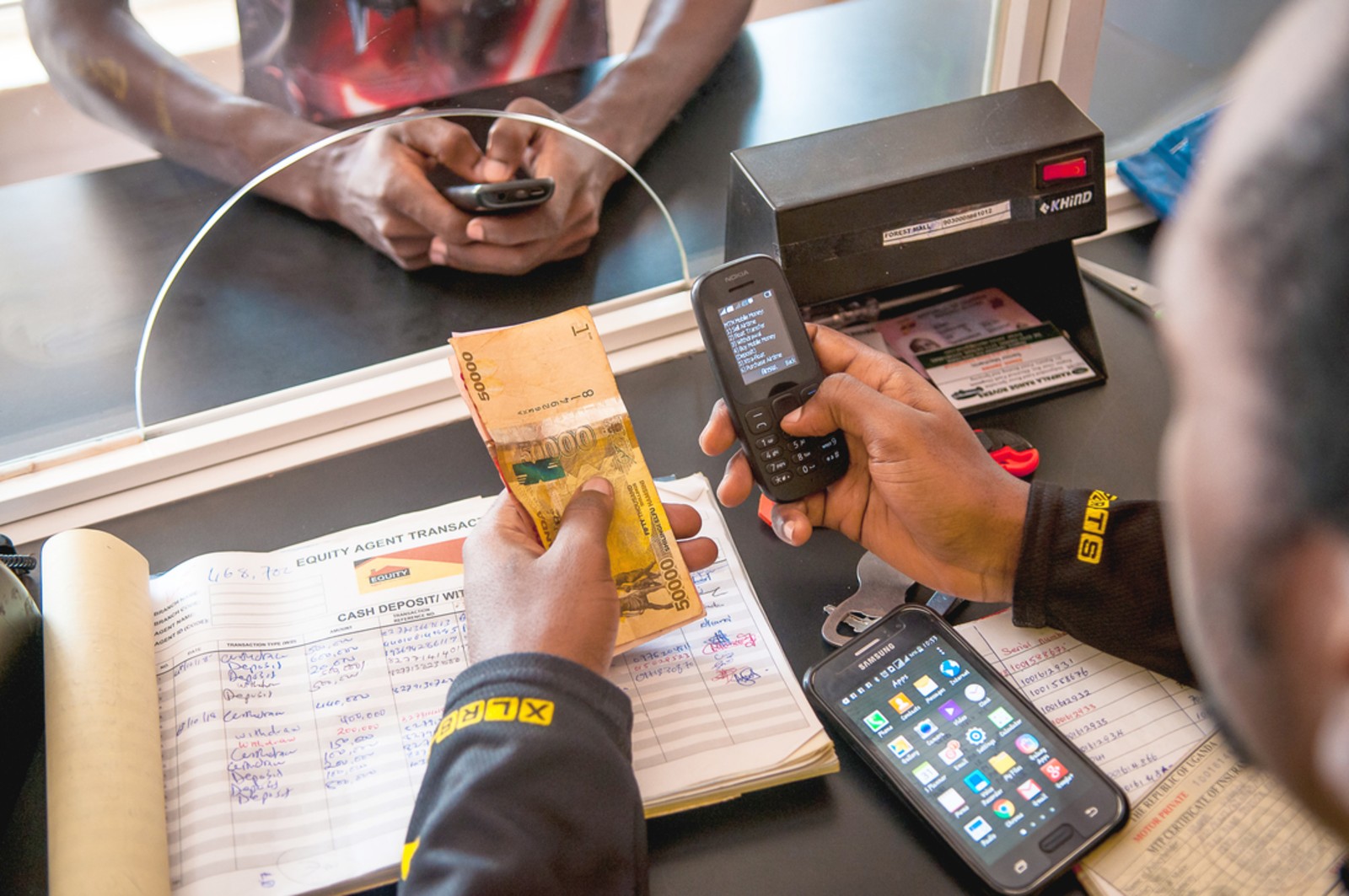
When we started testing Bitcoin wallets with users across Nigeria, Kenya, South Africa, Ghana, Uganda, and Tanzania, we expected to find minor usability issues. What we found was a fundamental disconnect between how wallets are designed and how people actually use them.
After 500+ user testing sessions and retention data from multiple wallet applications, five design patterns emerged that consistently moved 30-day retention by 35-45%. These aren't theoretical principles. They're tested in real markets with real users.
Pattern 1: Progressive Trust Building
The Problem
Most wallets ask users to trust them with their life savings before completing a single transaction. In markets where digital scams are common, this creates immediate friction.
Testing revealed that 67% of first-time users abandoned wallet setup when presented with seed phrase backup before their first transaction. They didn't understand why they needed to write down 12 random words when they hadn't received any Bitcoin yet. The security step felt like an obstacle, not a feature.
Letting users send and receive small amounts (under $10 USD equivalent) before requiring seed phrase backup changed the outcome completely. Once they'd experienced the value, backup compliance jumped from 23% to 81%. They backed up because they had something worth protecting.
What to Build
- Set a transaction limit of $10 USD equivalent for wallets without backup completed
- Show a persistent, friendly backup reminder after the first successful transaction
- Display current wallet value so users feel the growing urgency naturally
- Treat backup completion as a genuine milestone worth acknowledging
Pattern 2: Context-Aware Language
Bitcoin terminology is confusing enough in English. Translated literally into local languages, concepts like "seed phrase," "private key," and "wallet address" often become meaningless or actively misleading.
Key Finding
Users who saw explanations in their local language alongside English technical terms had 3x better comprehension and were 2.4x more likely to complete security-critical tasks correctly.
The solution isn't just translation. It's culturally relevant framing. In Swahili, comparing seed phrases to "ufunguo wa nyumba" (house keys) worked far better than a direct translation of "mbegu za maneno" (word seeds). The concept lands because the metaphor is familiar, not because the words are correct.
Pattern 3: Transaction Confirmation Clarity
43% of users who abandoned their first Bitcoin transaction did so not because they didn't want to complete it, but because they couldn't tell if it was safe to proceed.
The typical confirmation screen shows a long recipient address, an amount in BTC, a network fee in BTC, and a total in BTC. For users accustomed to mobile money where confirmation means seeing the recipient's name and the exact local currency amount, this creates paralysis.
The Pattern
Show amounts in local currency first, larger than the BTC figures. Display recipient verification prominently, using contacts, previous transaction history, or address book names. Express the fee as a percentage of the total so users can judge it intuitively.
Pattern 4: Recovery Path Visibility
When users make mistakes, and they will, they need to understand their options. In testing, 89% of users who encountered errors had no idea whether their Bitcoin was gone permanently or the problem was temporary. That uncertainty is what drives them to uninstall.
Every error state should clearly answer four questions: what happened, in plain language; whether their Bitcoin is safe; what they can do to resolve it; and how long they have to act if there's a time constraint. Error messages that answer these questions cut support ticket volume by 64% in the wallets we worked with.
Pattern 5: Social Proof Integration
Bitcoin adoption in Africa moves through peer networks. People trust Bitcoin because someone they know already uses it. Most wallet UX ignores this entirely, treating each user as an isolated individual rather than a node in a social network.
What Worked
Wallets that added social proof elements, showing which contacts use Bitcoin, enabling easy referrals, and displaying aggregated transaction volumes by country, saw 40% higher retention through the first 30 days compared to control groups.
Results Across Three Wallets
When we helped three Bitcoin wallets implement all five patterns, the outcomes were consistent across markets:
| Pattern | Key Metric | Change |
|---|---|---|
| Progressive Trust | Seed phrase backup completion | +58% |
| Context-Aware Language | Security task completion | +72% |
| Transaction Confirmation | Abandoned first transactions | -51% |
| Recovery Path Visibility | Support ticket volume | -64% |
| Social Proof | 30-day retention | +40% |
Why These Five
Each pattern addresses a different reason users leave. Trust issues drive early abandonment before the first transaction. Language barriers cause failure at security-critical moments. Confirmation paralysis kills first transactions. Error opacity causes panic when things go wrong. And ignoring social context wastes the most powerful acquisition and retention mechanism African users actually have.
Fix all five and you're no longer losing users to design problems. What's left are real product challenges worth solving.
These patterns are part of our open-source Bitcoin UX design system. Wallet developers can implement them freely, and we provide testing frameworks to validate effectiveness in specific markets. We're expanding the research to cover Lightning Network UX, onboarding flows, and multi-sig wallet patterns. If you're building for African users and want to implement these or contribute to the research, get in touch.
← Back to Home