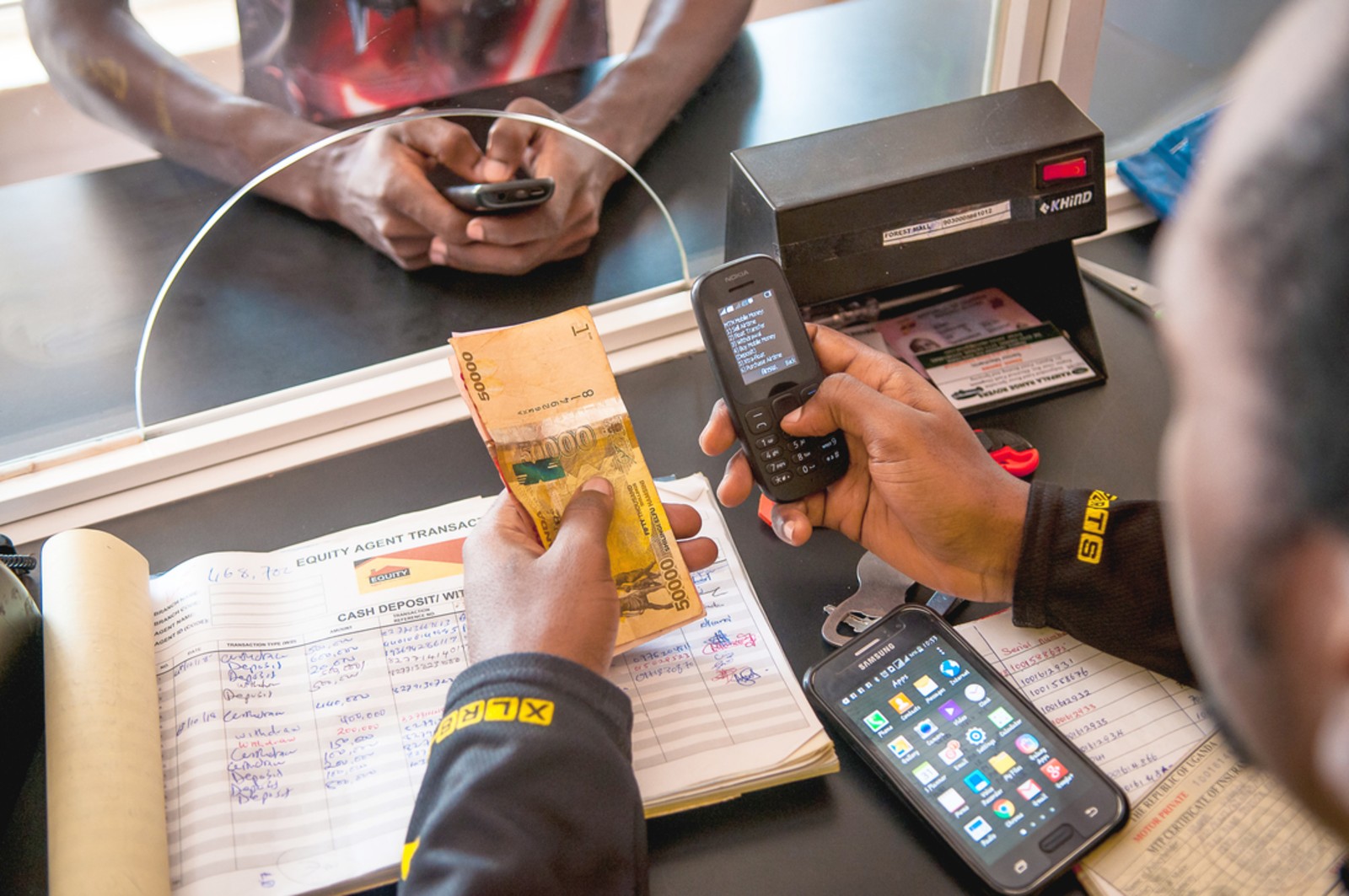
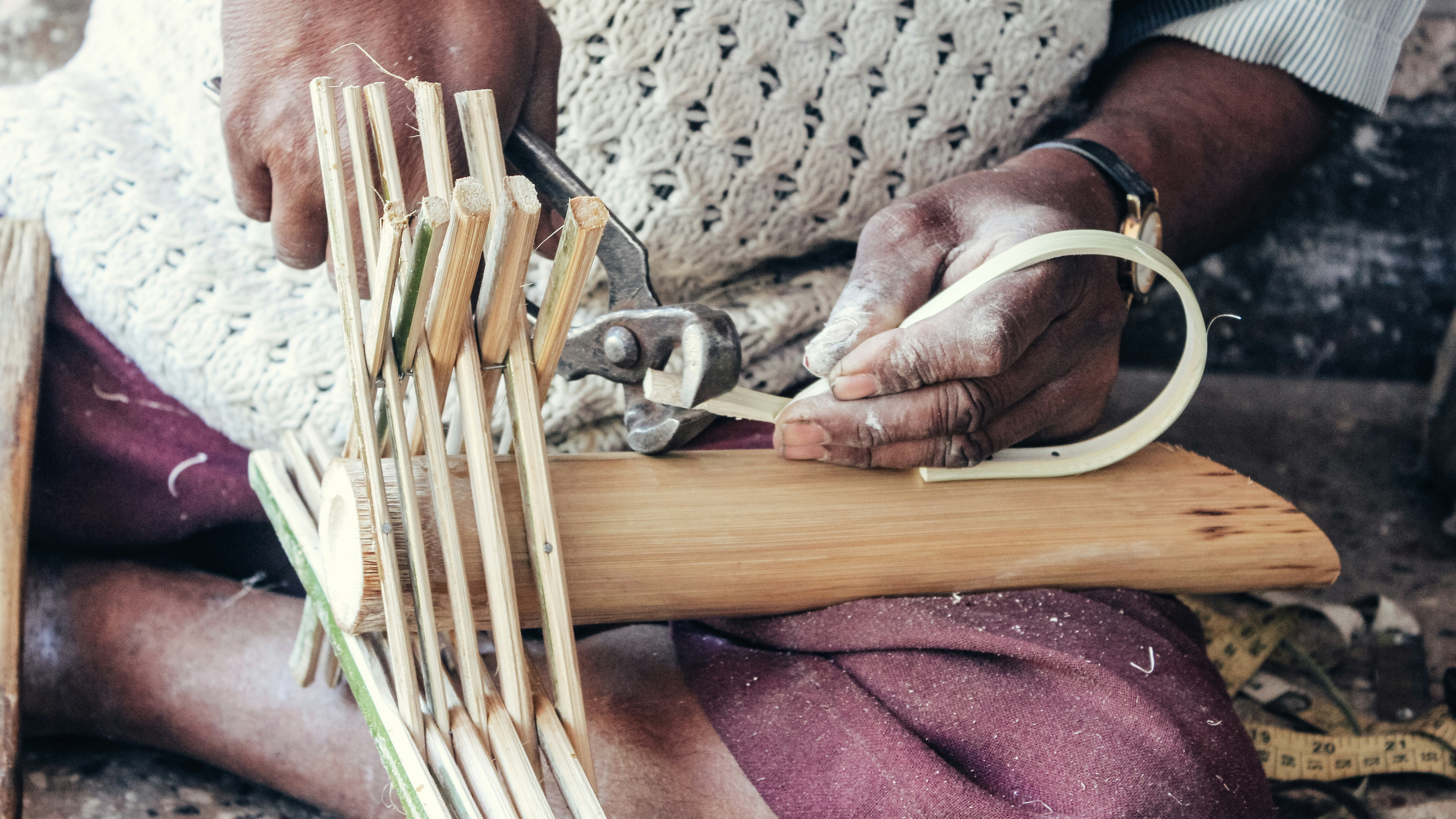
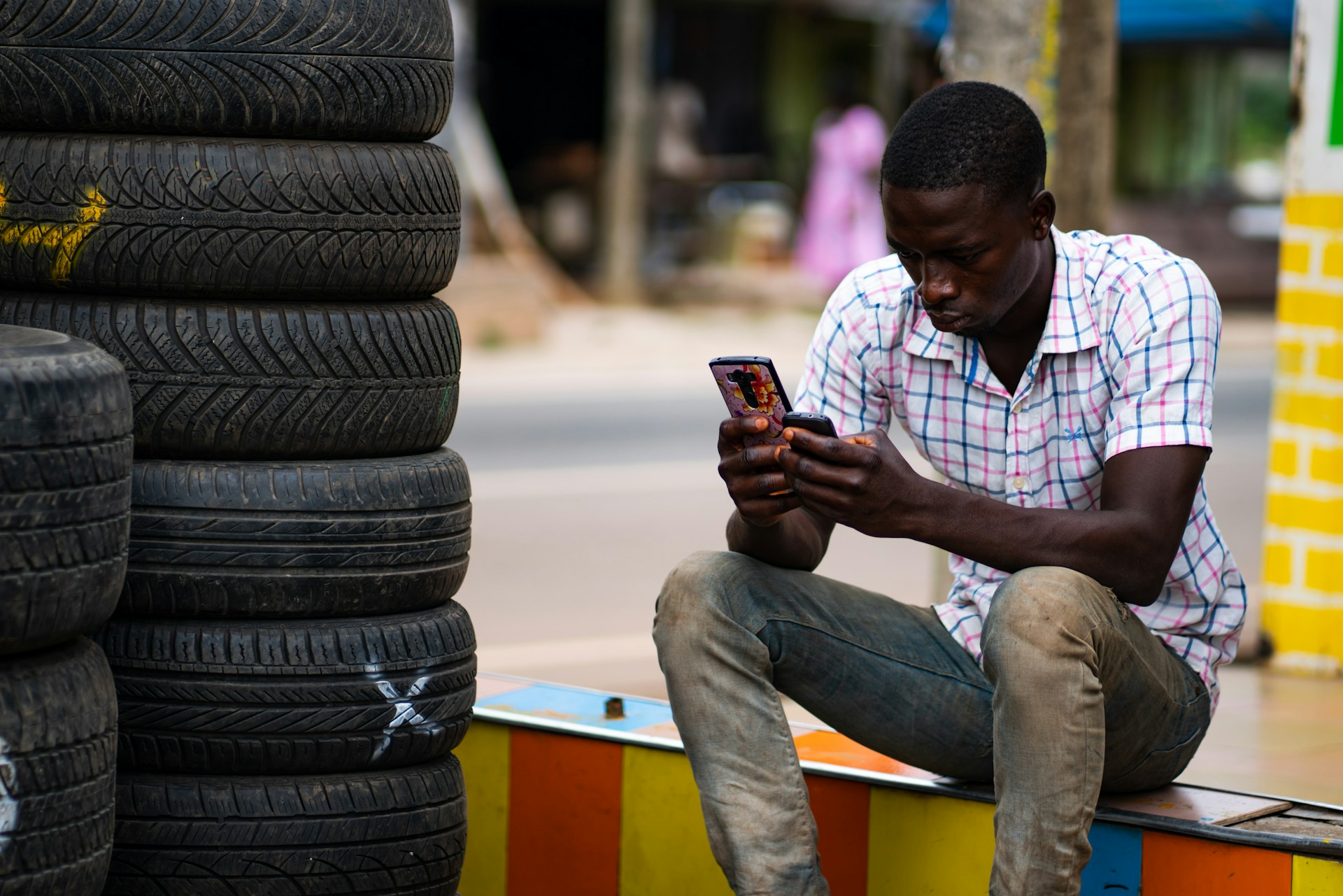
Look at the photograph above. A feature phone with a physical keypad. An open notebook written in Swahili. This is the technology that hundreds of millions of people on this continent actually use every day. Every Bitcoin wallet in mainstream circulation is completely unusable on it.
Our research across 340+ moderated sessions tracks where African smartphone users fail and what fixes those failures. But there is a larger population that smartphone-first Bitcoin design does not fail so much as ignore entirely. When using a wallet requires an app store, a data plan, a touchscreen, and the ability to read a 12-word seed phrase in English, the product has made a choice about who it is for. That choice excludes most of Africa.
"Financial sovereignty is supposed to be a human right. Rights that require a smartphone, reliable internet, and English literacy are privileges. Most of Africa has none of the three."
Who We're Talking About
A Kenyan farmer receiving money from a sibling in London, navigating the transfer through an M-Pesa agent because the nearest bank is 40 kilometres away. A Congolese refugee in a camp with intermittent WiFi, trying to receive support payments from family abroad. An Ethiopian journalist carrying a device that law enforcement cannot easily monitor, in a country where the wrong bank transaction attracts the wrong kind of attention. A Zimbabwean vendor who has watched multiple currencies collapse and wants something no government can devalue, but whose only phone has a T9 keypad.
These are not edge cases. Feature phones still represent the majority of devices in use across sub-Saharan Africa. USSD, the text-menu protocol that powers mobile banking, processes hundreds of millions of transactions daily on this continent. M-Pesa was built on it. Most of mobile banking in East Africa was built on it. The infrastructure for low-bandwidth, offline-capable financial transactions already exists and already works at scale. Bitcoin does not use it.
What USSD Is and Why It Matters
Dial *147# on a basic phone. A menu appears. Press a number, another menu appears. Through a sequence of numbered choices and short text inputs you can check a balance, send money, buy airtime, or pay a bill. No internet connection. Any phone made in the last 20 years. Under two minutes.
Why USSD Works Where Apps Don't
No internet required: USSD runs over the voice channel, not data. A 2G signal is enough.
Works on any phone: No app to install, no OS version to check, no storage to clear.
Opens instantly: No load time, no updates, no crashes. A USSD session is live in under a second.
Already familiar: Most African mobile money users navigate USSD menus daily. It is how they bank.
Getting Bitcoin to work over USSD is a genuine design challenge. Addresses, seed phrases, private keys, fees in satoshis, these are hard concepts to compress into a numbered menu on a 2-inch screen. But people said the same about mobile banking before M-Pesa proved them wrong. The problem is not the technology. It is the shortage of designers willing to take the constraint seriously.
The Remittance Last Mile
Africa receives around $95 billion in remittances each year. Sending that money costs an average of 8.5%, which means more than $8 billion a year in fees extracted from households that cannot afford them.
Bitcoin cuts that to near zero. A transaction from London to Nairobi costs the same as one from Nairobi to Nairobi, network fees measured in cents. For a family receiving $200 a month from abroad, the difference between 8.5% and near-zero is $17 kept in the household every single month. Over a year that is $200. For families living close to the edge, that is not a small number.
"The economics of Bitcoin remittances work. The UX does not. A sender in Manchester using a smartphone wallet means nothing if their mother in Lagos has a feature phone and no data plan."
A mother in Lagos can receive a Bitcoin payment from her daughter in Manchester, but only if she can open a wallet, understand what arrived, and turn it into something she can spend. If doing that requires a smartphone she does not have, a data plan she cannot afford, and a seed phrase in English she cannot read, the transaction fails at the final step. The sender did everything right. The product failed the recipient.
What fixes this is a USSD-accessible receiving flow: check a balance and receive a payment through a numbered menu, no app, no data, in Swahili or Hausa or Amharic. The Lightning Network makes the payment layer fast enough for USSD's session model. Building the menu flows is the design work that nobody has done yet.
Refugees, Activists, and Places Where the System Is the Threat
For an activist operating under a hostile government, the conventional financial system is part of the surveillance infrastructure. Bank accounts get frozen. Mobile money gets tracked and blocked. International transfers get stopped with a phone call from the right official. Bitcoin offers a way out of that, but only if it works without leaving a trail, without requiring an app download logged to an account, without depending on infrastructure the state controls.
Contexts Where Resilience Is Not Optional
Refugee situations: Africa has over 26 million registered refugees. Most have no documentation, no bank account, and no access to formal financial services. Receiving remittances or aid through Bitcoin requires a setup that works without identity verification or a smartphone.
Activists and journalists: In countries where financial surveillance is a tool of political control, wallets need to work without an internet footprint. Offline transaction signing, air-gapped devices, USSD access that leaves no app download trail.
Currency collapse: Zimbabwe, Sudan, Ethiopia. Residents who can hold Bitcoin hold something outside the crisis. But that only works if the interface for holding it does not require the same infrastructure that just collapsed.
All of this is technically possible. Offline transaction signing exists. Air-gapped key generation exists. SMS-based balance checking exists. None of it is a priority in mainstream Bitcoin wallet development, because the people building those wallets have never been in the situations that require it.
The Literacy Problem Nobody Talks About
Functional literacy in any written language cannot be assumed across much of rural sub-Saharan Africa. Designing for this is not about dumbing things down. It is about building interfaces that work through icons, audio, and visual confirmation rather than assuming the user can read English under financial pressure.
Bitcoin fails low-literacy users at every critical point in the flow:
Where Text-First Bitcoin UX Breaks
Seed phrase backup: 12 to 24 English words. No wallet we have tested offers a non-text alternative, no pictographic system, no audio option, no local-language physical backup guide.
Transaction confirmation: "Confirm sending 0.00024 BTC to bc1qxy2kgdygjrsqtzq2n0yrf2493p83kkfjhx0wlh" requires English literacy and the ability to verify a string of characters that means nothing to the human eye, under time pressure, with real money on the line.
Error messages: "Insufficient funds for fee" and "Invalid address format" are written for developers. They tell a low-literacy user nothing about what happened or what to do.
Onboarding: Almost every Bitcoin wallet onboarding flow is long, text-heavy, English-first, and assumes multi-step reading comprehension with no audio or visual support.
Icon-first confirmation screens. Audio in local languages for critical steps. Pictographic seed phrase backup, or at minimum a localised explanation of what those words represent and what happens if they are lost. Error messages written for the person holding the phone, not the engineer who wrote the code. These are not radical ideas. They are what designing for your actual user looks like.
What Resilient Bitcoin Design Requires
Resilience is not a mode you add to an app. It is a set of starting assumptions: connectivity is unreliable, devices are basic, literacy cannot be taken for granted, and the cost of getting it wrong is not a bad review but financial exclusion or physical danger.
1. USSD Receiving and Balance Checking
A person with a feature phone needs to be able to receive Bitcoin and check a balance through a USSD menu, no app, no data connection, no touchscreen. Lightning Network makes the payment fast enough for USSD's synchronous session. The remaining work is designing the menu flows.
2. Offline Transaction Signing
In low-connectivity and politically hostile environments, signing a transaction without touching the internet is essential. A transaction can be constructed offline, moved via QR code or Bluetooth to a connected device for broadcast, and confirmed without the signing device ever being online. This pattern exists in the Bitcoin ecosystem. It has never been designed for non-technical users.
3. The Language the User Thinks In
Swahili, Hausa, Amharic, Yoruba, Zulu, Twi. Not a translation of an English interface, a redesign of the concepts for the local context. A seed phrase explanation that works for a Swahili speaker in rural Tanzania is a different document from one that works for a Yoruba speaker in Lagos, even if both are technically translations of the same English text.
4. Seed Backup Without Reading and Writing
Alternatives to the 12-word written backup: numbered pictograms that can be drawn or copied without reading. Audio recording support. Physical backup cards printed in local language with clear visual instructions. The security of the backup should not depend on English literacy.
5. Build for 2G First
Design the core transaction flow to work on a 2G connection. No large images, no auto-loading content, no features that silently fail on an unstable connection. Better connectivity should add optional features, not enable basic functionality.
The Argument Bitcoin Makes About Itself
Bitcoin says it is a monetary system outside the control of any government, bank, or corporation, available to anyone with access to the network. That claim is only credible if access to the network does not require a $300 smartphone, reliable broadband, and the ability to read a security phrase in English.
Sovereignty that requires a smartphone is not sovereignty for a refugee. Financial freedom that requires broadband is not freedom for a farmer in the Sahel. Human rights that depend on English literacy are not rights for the hundreds of millions of Africans who read and think in other languages.
The technical barriers here are real but they are not unique. M-Pesa solved harder problems with less. Every mobile banking system that works at scale in Africa solved harder problems with less. What they had was designers who took the constraint seriously instead of designing around it. That is all this requires.
"Africa does not need to wait for better phones. Bitcoin needs to work with the phones Africa already has."
What We're Building
The Pan-African Bitcoin UX & Resilience Initiative is running research into USSD-accessible Bitcoin flows, low-literacy onboarding patterns, offline transaction signing for non-technical users, and the specific design requirements of high-risk contexts including refugee situations, activist use cases, and communities living through currency crises.
Everything we find gets published openly. The patterns get documented so any wallet team can use them. The community we are building is made up of designers and researchers who know these contexts from the inside, because they live and work in them.
If you are building a Bitcoin wallet and want to understand what it takes to reach the users currently locked out, our UX support programme is a good place to start. If you want to work on these problems as a designer or researcher, join the community. And if you are working in a humanitarian, human rights, or refugee context and want to think through what Bitcoin infrastructure for your users could look like, write to us directly.
The feature phone in that photograph is not a symbol of what people lack. It is a symbol of what Bitcoin design has so far refused to address.
← Back to Home